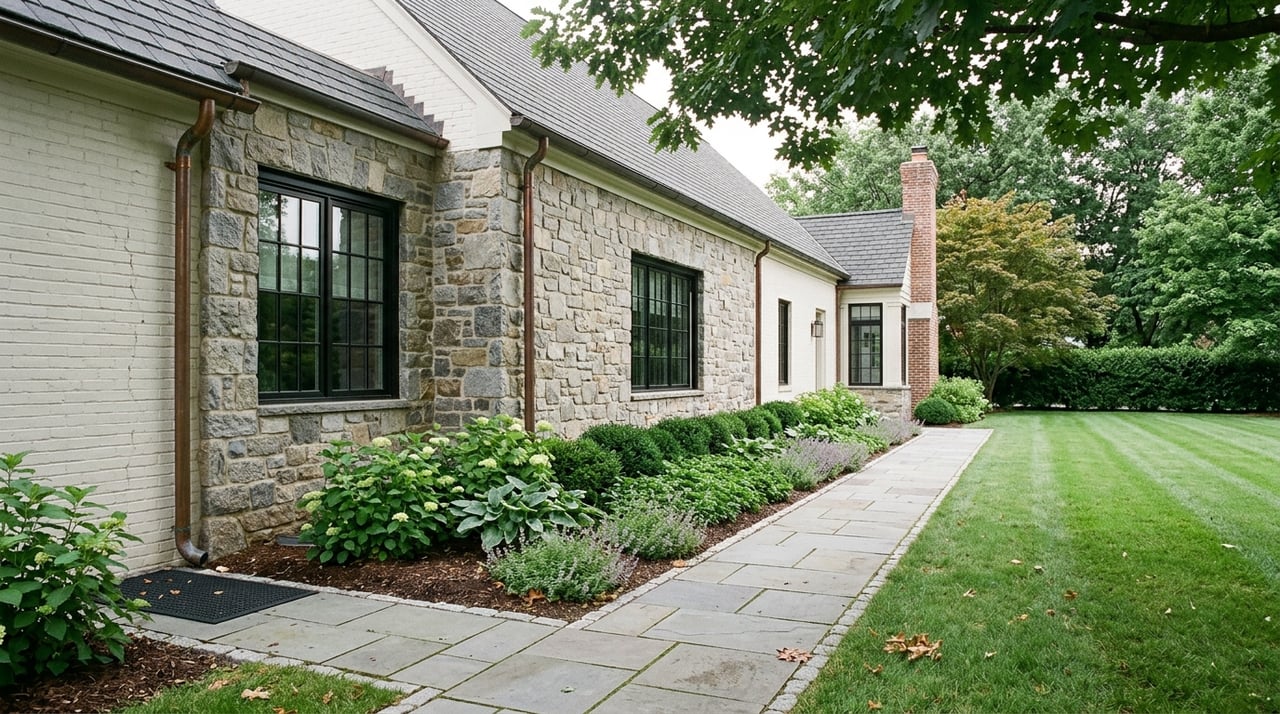
Planning A Move-Up Purchase In Wayne And Nearby Main Line Towns
June 25, 2026
June 25, 2026
Thinking about your next home in Wayne or along the Main Line can feel exciting until the numbers and timing start to collide. If you already own a home, a move-up purchase is not just about finding more space. It is about lining up equity, financing, location goals, and market speed in a way that keeps your options open. In this guide, you’ll learn how to plan a move-up purchase in Wayne and nearby towns with more clarity and less guesswork. Let’s dive in.
Wayne is a small, high-income Main Line community with a downtown core and strong owner occupancy. The Census Bureau estimates a 2020 population of 7,160, an owner-occupied housing rate of 66.1%, a median owner-occupied home value of $713,300, and a median household income of $150,539. That profile helps explain why many buyers in Wayne are not making a first purchase, but planning their next one carefully.
The market also tends to reward preparation. Recent Wayne market snapshots showed a median sale price of $849,492, average market time of 17 days, and sale prices running about 4% above list on average. For you, that means the move-up process usually works best when your financing, home search criteria, and sale strategy are all aligned before the right property appears.
Not every move-up buyer wants the same thing. Some want a larger home, some want a different setting, and others want easier access to trains, shops, or major roads. Before you look at listings, define what “moving up” really means for your household.
A clear goal can help you avoid paying more without solving the right problem. It can also narrow your search to the towns that best match your priorities instead of treating the Main Line as one single market.
If your goal is simply more space, the upper end of the local ladder often includes Radnor Township, Villanova, St. Davids, and Haverford. Recent median sale snapshots place these areas roughly from $1.25 million to $1.47 million. That is a meaningful jump from Wayne and usually calls for either strong equity, a larger monthly payment, or both.
If your goal is day-to-day convenience, Wayne’s downtown core remains a key draw. Local township materials highlight downtown Wayne, train access, and convenient routes including 202, 76, 30, and the Pennsylvania Turnpike across nearby postal regions such as Wayne, Chesterbrook, Paoli, Berwyn, Devon, and Malvern. In practical terms, that makes in-town Wayne and other commuter-oriented parts of the corridor strong options if access and convenience matter most.
If your goal is a larger lot or a less in-town feel, westward markets like Paoli, Malvern, and Devon often enter the conversation. These areas show price and property-type variety, including detached homes, townhomes, and condos. For some buyers, moving west creates a better trade-up in space without stepping all the way into the highest price tier.
One of the simplest ways to plan a move-up purchase is to compare nearby towns as a ladder, not a blur. Recent median sale snapshots place Chesterbrook at about $404,758, Paoli at $534,680, Ardmore at $664,103, Malvern at $664,602, Wayne at $849,492, Devon at $1.08 million, Radnor Township at $1.25 million, Villanova at $1,299,222, St. Davids at $1,399,163, and Haverford at $1,474,504.
These figures are best used as planning bands, not exact offer targets. Main Line submarkets can shift quickly, and the housing stock varies widely from one town to the next.
| Area | Recent median sale price |
|---|---|
| Chesterbrook | $404,758 |
| Paoli | $534,680 |
| Ardmore | $664,103 |
| Malvern | $664,602 |
| Wayne | $849,492 |
| Devon | $1.08 million |
| Radnor Township | $1.25 million |
| Villanova | $1,299,222 |
| St. Davids | $1,399,163 |
| Haverford | $1,474,504 |
Looking at the ladder this way can help you estimate what your next step may cost. The jump from Wayne to Devon is about $230,508, or 27%. The jump from Wayne to Radnor Township is about $400,508, or 47%, while Villanova is about $449,730, or 53%, and Haverford is about $625,012, or 74% higher.
A common mistake is assuming every Main Line move-up search works the same way. It does not. Wayne, Paoli, Devon, Villanova, and Haverford may all sit in the same broad corridor, but they function as different submarkets with different price ranges, home types, and buyer expectations.
Recent sold examples make that clear. Wayne has included sales from around $406,000 for a four-bedroom home to $790,000 for a two-bedroom, two-bath unit, plus several detached homes above $1 million and a $3.1 million six-bedroom sale. Paoli has ranged from a $302,500 three-bedroom house and a $379,000 condo to a $2.195 million detached home.
That spread matters because your move-up strategy should compare specific property types, not just town names. A larger condo in one town, an older detached home in another, and a newer townhome elsewhere may all compete for the same budget.
If you already own a home, your first instinct may be to focus on your likely sale price. That is only part of the picture. What really matters is your usable equity after the costs of selling and buying are accounted for.
A practical way to think about it is this: usable equity equals your expected sale price minus your mortgage payoff, selling expenses, transfer tax, and any prep or repair costs needed before listing. That number is more useful than a rough online estimate because it reflects what you can actually deploy into your next purchase.
In Pennsylvania, the realty transfer tax is 1% of the value transferred, and local jurisdictions often add another transfer tax. Both grantor and grantee are jointly and severally liable. That means transfer tax can materially affect the cash side of your move-up plan.
Closing costs on the purchase side typically run about 2% to 5% of the home purchase price before the down payment. If you are aiming for a higher price bracket, those costs can become a meaningful line item very quickly. Planning for them early helps you avoid stretching too far on the purchase itself.
For many move-up buyers, the core financing question is not just how much equity they have. It is how to access that equity in a way that supports the next purchase without adding unnecessary complexity.
Some homeowners look at a home equity loan or a HELOC for temporary liquidity. A home equity loan pays out as a lump sum, while a HELOC works as a revolving line of credit secured by your home. If you already have a first mortgage, either option becomes a second mortgage.
There are also specialized tools such as piggyback second mortgages or short-term bridge loans. A piggyback second mortgage may help finance a down payment, but it can make refinancing harder and may carry higher or adjustable rates. Bridge loans can help buyers who plan to sell a current home within a year, but they are not always the cleanest fit.
For many households, the best path is the one that keeps your monthly obligations manageable and your offer strength intact. This is where careful planning matters, especially in a fast-moving market like Wayne.
Before you decide that one town is a better move-up than another, compare your options through a practical lens. Price is important, but it should follow your real goals.
Start with a few basics:
This approach can keep you from overpaying for the wrong upgrade. It also helps you see whether your best trade-up is staying in Wayne, moving east toward higher-priced Main Line addresses, or moving west where your budget may stretch further.
A move-up purchase has more moving parts than a standard home search. You may be balancing timing between a sale and a purchase, estimating improvement costs on both properties, and deciding whether a home’s layout or condition is worth the premium.
That is where a calm, analytical approach adds value. Brent Erickson’s engineering, construction, investing, and property management background supports a more practical evaluation of homes, renovations, and hidden value. For move-up buyers in Wayne, St. Davids, Villanova, Paoli, Malvern, Devon, and nearby Main Line communities, that kind of grounded perspective can help you make decisions that fit both your lifestyle and long-term goals.
If you’re planning a move-up purchase and want a thoughtful strategy around timing, pricing, and property fit, Brent Lyle Erickson can help you map out the next step with clarity.
Stay up to date on the latest real estate trends.
Whether you’re buying your first home, selling a property, or exploring investment opportunities, Brent Erickson offers the patience, knowledge, and commitment needed to help you reach your real estate goals with confidence.