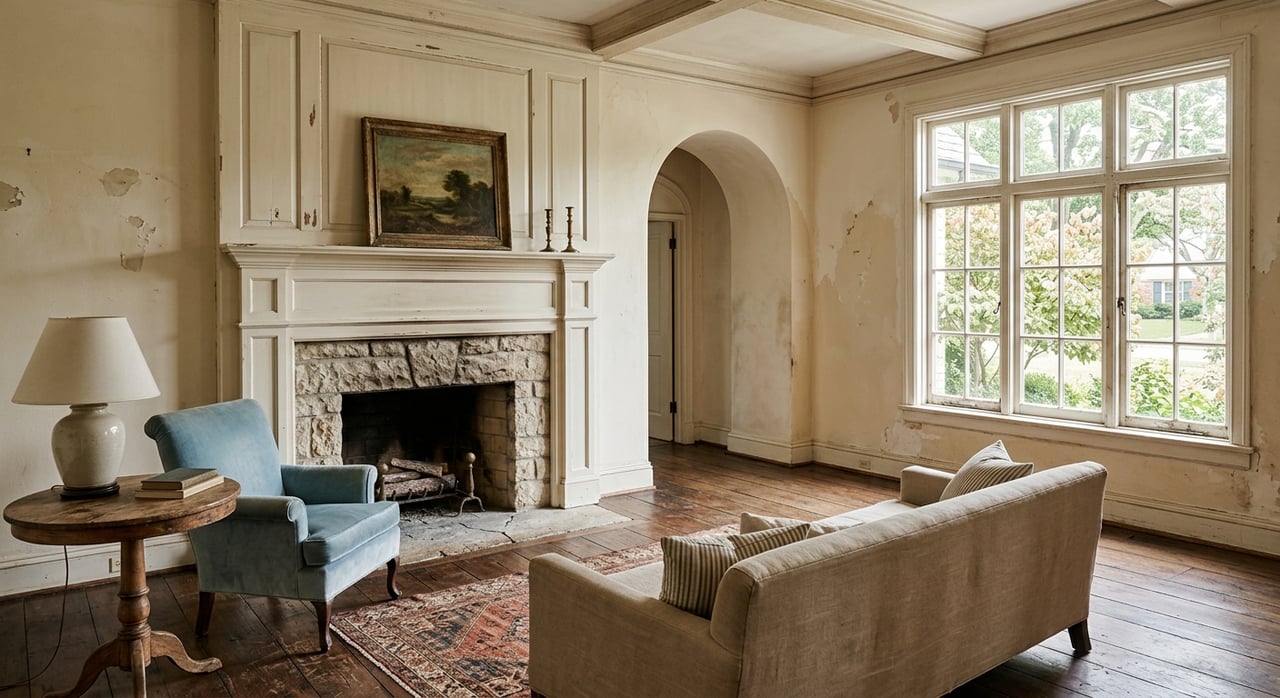
Evaluating Renovation Potential When Buying An Older Home In Wayne
July 2, 2026
July 2, 2026
If you are thinking about buying an older home in Wayne, charm alone is not enough. A beautiful facade, original millwork, and mature setting can be incredibly appealing, but the real question is whether the home makes sense for your budget, goals, and renovation plans. When you know what to evaluate before you buy, you can spot real opportunity, avoid expensive surprises, and move forward with more confidence. Let’s dive in.
Wayne is not a market where you can rely on generic renovation advice. Public benchmarks place local home values in a high range, with Radnor Township owner-occupied housing values reported at $833,900 and Wayne listing and value metrics commonly landing in the mid-$900,000s. That means your renovation budget should be measured against local value expectations, not broad national averages.
Neighborhood context matters here too. In parts of Wayne, especially within Radnor Township’s North Wayne, Louella Court, and South Wayne historic districts, exterior changes may require review and a certificate of appropriateness before certain work can begin. If you are considering an older property, the house itself is only part of the equation. The approval path matters as well.
The best older-home renovation candidates often already have a workable floor plan. If the bedroom count, bathroom count, and general flow fit your needs, you may be able to improve the home without taking on the cost and complexity of a large addition.
That matters because smaller, function-focused projects tend to show better resale performance than major expansions. In the Philadelphia-region Cost vs. Value data, a minor kitchen remodel shows much stronger cost recovery than a major midrange kitchen remodel, and large primary suite additions perform far worse. In practical terms, improving what is already there is often a safer move than creating a larger, more customized home.
Look for these strengths when touring an older home in Wayne:
If the home needs a total reworking of room locations or a large addition just to feel functional, your budget can escalate quickly.
Before you think about finishes, focus on the parts of the house that are hardest and most expensive to ignore. For older homes, that usually means structure, moisture control, roofing, plumbing, electrical, heating and cooling, ventilation, and fireplaces.
Home inspection guidance for older properties points buyers toward the foundation and framing, roof condition, gutters and downspouts, plumbing supply and drainage, electrical panels and breakers, vents and flues, insulation, ventilation, and fireplace buildup. These are not cosmetic items, but they can drive your renovation budget more than any countertop or tile selection.
Moisture issues can quietly affect a home’s condition over time. When water moves through the building shell or around the foundation, it can contribute to mold, rot, structural damage, and paint failure.
Pay close attention to grading, drainage patterns, and downspout placement. Soil should direct water away from the home, and downspouts should carry runoff several feet from the foundation. If drainage is poor, fixing that should come before aesthetic upgrades.
Many older homes in Wayne were built before 1978, which means renovation plans may involve lead-related precautions. According to the EPA, renovation, repair, or painting work in a pre-1978 home can create dangerous lead dust, especially when surfaces are sanded, cut, or demolished.
Asbestos can also affect your budget and timeline. If suspect materials are damaged or your renovation will disturb them, sampling by a properly trained and accredited asbestos professional may be needed. For buyers, this is not just a health and safety issue. It can change contractor selection, project cost, and the pace of the work.
If you are planning to open walls, refinish surfaces, or remove older materials, due diligence should happen early. A home that seems like a cosmetic project can turn into a more technical renovation once lead-safe work practices or asbestos-related steps are added.
That does not mean you should avoid older homes automatically. It means you should evaluate them with a realistic scope and reserve.
In Wayne, renovation potential is shaped by local rules as much as by architecture. Radnor requires permits for many common projects, including additions, interior alterations, structural repairs, HVAC work, plumbing, electrical work, roof replacement, decks, porches, patios, fences, and walls.
If a property is within one of Radnor’s historic districts, exterior additions, alterations, and demolition may also trigger Historic Architectural Review Board review and a certificate of appropriateness. That can affect design choices, timing, and how easily you can carry out the project you have in mind.
Before closing on an older Wayne home, it helps to clarify:
These answers can help you separate a promising project from a frustrating one.
Not every renovation dollar works equally hard. In the Philadelphia market data, the projects with the strongest cost recovery are often practical, visible improvements rather than large-scale transformations.
High-performing examples include garage door replacement, steel entry door replacement, manufactured stone veneer, minor kitchen remodels, and fiber-cement siding replacement. Vinyl siding replacement and wood deck additions also show solid results. These are the kinds of updates that improve function, presentation, and first impressions without over-customizing the home.
Some updates still make sense, but they tend to show lower resale return. These include bath remodels, HVAC conversion, asphalt-shingle roof replacement, basement remodels, and window replacement.
That does not make them bad decisions. It simply means they are often best treated as practical improvements rather than easy value multipliers.
Large additions and highly personalized renovations are where buyers should be especially careful. Major kitchen remodels, bath additions, upscale bath remodels, accessory dwelling units, and primary suite additions show much weaker cost recovery in the regional data.
If your goal is long-term enjoyment and you plan to stay for many years, those projects may still be worth it. If your goal is to protect resale flexibility, smaller and more strategic updates are usually the better path.
When you evaluate an older home in Wayne, it helps to sort expected work into three buckets. This creates a clearer decision-making framework and keeps cosmetic excitement from overshadowing expensive fundamentals.
Here is a simple way to think about it:
| Budget Bucket | What It Includes | Why It Matters |
|---|---|---|
| Must-fix systems | Roof, drainage, structure, plumbing, electrical, HVAC | Protects the home and prevents bigger problems |
| Value-add updates | Minor kitchen work, curb appeal, siding, entry improvements | Often aligns better with resale potential |
| Lifestyle upgrades | Additions, luxury finishes, highly customized changes | Best for personal enjoyment, not always for return |
This framework can help you compare one house to another more objectively.
Older homes often reveal hidden conditions after work begins. Once walls are opened or older materials are removed, the actual scope may expand.
That is why a contingency reserve is so important. Renovation financing programs may include contingency as part of the project budget, and from a practical standpoint, it gives you room to handle surprises without derailing the entire plan.
If you are buying a home that needs work, financing options may help you package purchase and renovation costs together. Fannie Mae’s HomeStyle Renovation product can be used for permanently affixed improvements such as kitchen and bath updates, window upgrades, HVAC replacement, and backup power.
For purchases, the covered amount is limited to 75% of the lesser of the purchase price plus renovation costs or the as-completed appraised value. HUD’s 203(k) program is another option for homes that need rehabilitation. The key is to match the financing structure to the scope of work and the home’s likely after-renovation value.
In a market like Wayne, over-improvement is a real risk. When home values are already high, it can be tempting to assume that every renovation dollar will be rewarded later. In reality, there is still a ceiling created by nearby comparable homes and by how lenders view as-completed value.
If your planned work pushes the home well beyond local comps, you may not see that spending reflected at resale. The most balanced approach is usually to buy a home with solid bones, a workable layout, and room for thoughtful improvements that fit the neighborhood and price point.
The right older home in Wayne can offer character, location, and real upside. But the best opportunities usually are not the ones with the biggest dream boards. They are the homes where layout, systems, review requirements, and budget all line up in a practical way.
That is where a measured, analytical approach matters. When you look past finishes and focus on structure, approvals, cost recovery, and long-term fit, you put yourself in a much stronger position to buy well.
If you are weighing an older home in Wayne and want a steady second opinion on renovation potential, layout, and value, Brent Lyle Erickson can help you think through the tradeoffs and identify the opportunities worth pursuing.
Stay up to date on the latest real estate trends.
Whether you’re buying your first home, selling a property, or exploring investment opportunities, Brent Erickson offers the patience, knowledge, and commitment needed to help you reach your real estate goals with confidence.